We Use CookiesWe use cookies to enhance the security, performance, functionality and for analytical and promotional activities. By continuing to browse this site you are agreeing to our privacy policy

10 Best Travel Cameras 2026 in the United States
How do we rank products for you?

Our technology thoroughly searches through the online shopping world, reviewing hundreds of sites. We then process and analyze this information, updating in real-time to bring you the latest top-rated products. This way, you always get the best and most current options available.

headphones-stars

Our Top Picks

#1

Winner

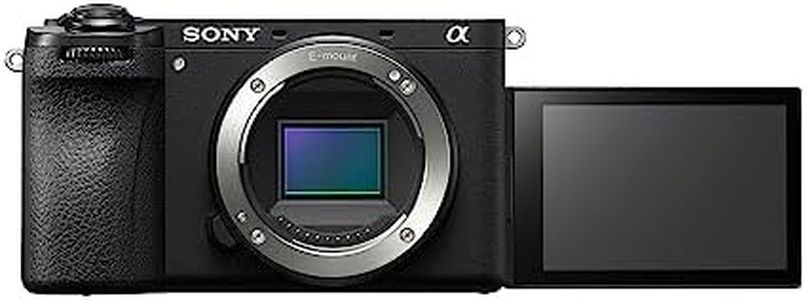
Sony Alpha 6700 – APS-C Interchangeable Lens Camera with 26 MP Sensor, 4K Video, AI-Based Subject Recognition, Log Shooting, LUT Handling and Vlog Friendly Functions, Black

Rating
10.0
Chosen by1,108
Megapixels
Battery Life
Image Stabilization

Most important from
350 reviews

Megapixels
The 26MP sensor delivers sharp, detailed images with excellent dynamic range and low noise, even in challenging lighting conditions.
Battery Life
Battery life stands out as excellent for a mirrorless camera, supporting extended use without frequent recharging.
Image Stabilization
In-body stabilization helps reduce shake but doesn’t fully match the smoothness achievable with additional gear like gimbals for handheld video.
Size and Weight
The camera’s compact size and articulating screen make it highly convenient for travel and shooting from creative angles.

The Sony Alpha 6700 is a strong choice for travelers who want high-quality photos and videos without carrying bulky gear. It features a 26MP APS-C sensor, which strikes a good balance between image detail and compact size. The sensor-shift image stabilization helps keep shots steady, even when you’re on the move – a big plus for travel. It supports interchangeable Sony E-mount lenses, giving you flexibility in zoom range from wide-angle to telephoto (up to 200mm), which covers most travel scenarios. The camera also excels in autofocus, with 759 points and AI-based subject recognition, so you can capture sharp photos of people, animals, or fast action easily.

Video capabilities are impressive too, with 4K recording at high frame rates and advanced features aimed at vloggers and filmmakers. At just 14.5 ounces and with a 3-inch articulating screen, it’s portable and convenient for shooting from different angles. Battery life is decent for a mirrorless model, though you might want a spare battery on longer trips. Connectivity options like Wi-Fi and Bluetooth allow quick sharing of images to your phone, which is handy when traveling.

On the downside, the camera does not include a built-in flash, so you may need external lighting in low light. Also, while it’s feature-packed, it’s best suited for those who want professional-level results and are comfortable learning some controls. The Sony Alpha 6700 is well-suited to travelers who value image quality, versatility, and advanced video features in a compact form.

Rating
10.0
Chosen by1,108
Megapixels
Battery Life
Image Stabilization

Most important from
350 reviews

Megapixels
The 26MP sensor delivers sharp, detailed images with excellent dynamic range and low noise, even in challenging lighting conditions.
Battery Life
Battery life stands out as excellent for a mirrorless camera, supporting extended use without frequent recharging.
Image Stabilization
In-body stabilization helps reduce shake but doesn’t fully match the smoothness achievable with additional gear like gimbals for handheld video.
Size and Weight
The camera’s compact size and articulating screen make it highly convenient for travel and shooting from creative angles.
#2

Sony a7 III Full-Frame Mirrorless Interchangeable-Lens Camera with 28-70mm Lens with 3-Inch LCD (Black)

Rating
9.1
Sensor Size

Most important from
905 reviews

Sensor Size
Its sensor excels in handling all kinds of lighting conditions, especially impressive for shooting in available light.

The Sony a7 III is a strong choice for travelers who want high-quality photos without carrying bulky gear. It features a large full-frame 24.2MP sensor, which means it captures sharp, detailed images with great low-light performance thanks to a wide ISO range. The included 28-70mm lens covers basic wide to short telephoto needs but offers only a modest 2x zoom, which might feel limiting if you want to capture distant subjects. However, the camera’s optical image stabilization helps keep shots steady, reducing blur from hand movements—a big plus when shooting on the go. Its autofocus system is fast and reliable, covering most of the frame, so you can quickly capture moments even in tricky conditions. The 3-inch LCD screen is handy for composing shots and reviewing photos.

While the camera is mirrorless and compact compared to traditional DSLRs, it's still a bit heavier than many travel-specific cameras, which might be a consideration if you prefer very lightweight gear. Battery life is solid for a mirrorless model, allowing for extended shooting sessions without frequent recharging. Connectivity options like USB make it easy to transfer images.

The Sony a7 III is well-suited for travelers who want professional-level image quality and versatility but don't mind carrying a bit more weight and are okay with upgrading lenses later for more zoom or specialized shooting.

Rating
9.1
Sensor Size

Most important from
905 reviews

Sensor Size
Its sensor excels in handling all kinds of lighting conditions, especially impressive for shooting in available light.
#3

Sony RX100 VII Premium Compact Camera with 1.0-Type Stacked CMOS Sensor (DSCRX100M7), Black

Rating
8.8
Megapixels
Zoom Range
Image Stabilization

Most important from
585 reviews

Megapixels
The 20MP sensor and 4K recording with audio input provide outstanding image and video quality, making it worth the price tag.
Zoom Range
Its 200mm zoom capabilities and steady shot feature make it perfect for capturing clear and stable videos while on the move.
Image Stabilization
Its 200mm zoom capabilities and steady shot feature make it perfect for capturing clear and stable videos while on the move.
Size and Weight
The Sony RX100 VII is a powerful pocket-sized camera that remains relevant and delivers excellent performance with advanced Real-time Tracking and Eye AF.
Connectivity
The addition of a mic input is a significant upgrade, enhancing its appeal for vloggers and videographers.

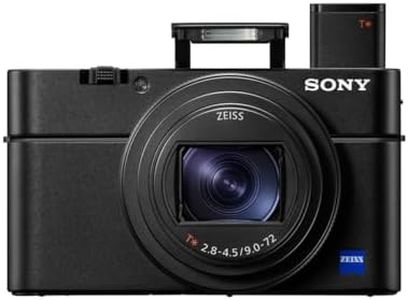
The Sony RX100 VII is a highly capable travel camera, perfect for those who want premium quality without the bulk of a DSLR. It features a 1.0-type stacked CMOS sensor with 20.1 megapixels, delivering excellent image quality. The Zeiss Vario-Sonnar T 24-200mm lens provides a versatile zoom range and large aperture, making it suitable for various shooting conditions, from wide landscapes to detailed close-ups. Its compact size and lightweight design (275 grams) make it easy to carry around, which is great for travel.

Additionally, the camera boasts impressive autofocus capabilities with 357-point phase detection and 425-point contrast detection, ensuring sharp and quick focusing in diverse scenarios. The real-time tracking and eye AF for both humans and animals are standout features for both stills and videos. For videographers, 4K recording with active image stabilization is a major plus, though some might find the 30-minute recording limit a drawback. The camera supports Bluetooth and Wi-Fi connectivity, allowing for easy sharing and remote control.

However, the battery life might be a concern for extended trips, as the 1240 mAh battery could require frequent recharging. The Sony RX100 VII packs a lot of professional-level features in a compact form, making it an excellent choice for travel enthusiasts who need a reliable and high-quality camera on the go.

Rating
8.8
Megapixels
Zoom Range
Image Stabilization

Most important from
585 reviews

Megapixels
The 20MP sensor and 4K recording with audio input provide outstanding image and video quality, making it worth the price tag.
Zoom Range
Its 200mm zoom capabilities and steady shot feature make it perfect for capturing clear and stable videos while on the move.
Image Stabilization
Its 200mm zoom capabilities and steady shot feature make it perfect for capturing clear and stable videos while on the move.
Size and Weight
The Sony RX100 VII is a powerful pocket-sized camera that remains relevant and delivers excellent performance with advanced Real-time Tracking and Eye AF.
Connectivity
The addition of a mic input is a significant upgrade, enhancing its appeal for vloggers and videographers.

Buying Guide for the Best Travel Cameras

Choosing the right travel camera can significantly enhance your travel experiences by allowing you to capture high-quality photos and videos of your adventures. When selecting a travel camera, it's important to consider various specifications that will impact the camera's performance, portability, and suitability for your specific needs. Here are some key specs to consider and how to navigate them to find the best fit for you.
Sensor SizeThe sensor size of a camera determines the quality of the images it can produce. Larger sensors generally capture more light, resulting in better image quality, especially in low-light conditions. Common sensor sizes include Full Frame, APS-C, and Micro Four Thirds. Full Frame sensors offer the best image quality but are usually found in larger, heavier cameras. APS-C sensors provide a good balance between image quality and portability, making them a popular choice for travel. Micro Four Thirds sensors are smaller and more compact, making cameras with these sensors lightweight and easy to carry. Choose a sensor size based on your priority between image quality and portability.
MegapixelsMegapixels refer to the resolution of the camera's sensor, indicating how many millions of pixels the camera can capture. Higher megapixels mean more detail in your photos, which is useful for large prints or cropping images without losing quality. However, more megapixels also mean larger file sizes. For most travel photography needs, a camera with 16-24 megapixels is sufficient. If you plan to print large photos or need to crop images extensively, consider a camera with higher megapixels.
Lens OptionsThe availability and versatility of lenses can greatly impact your photography. Some travel cameras come with fixed lenses, while others have interchangeable lenses. Fixed lens cameras are more compact and convenient but limit your ability to change focal lengths. Interchangeable lens cameras offer more flexibility, allowing you to switch between wide-angle, standard, and telephoto lenses based on your shooting needs. If you prefer convenience and simplicity, a fixed lens camera might be ideal. If you want more creative control and flexibility, opt for a camera with interchangeable lenses.
Zoom RangeThe zoom range of a camera determines how close you can get to your subject without physically moving. Optical zoom is more important than digital zoom, as it maintains image quality. Travel cameras often have zoom ranges from 3x to 30x or more. A higher zoom range is useful for capturing distant subjects, such as wildlife or landscapes. However, higher zoom ranges can also make the camera bulkier. Consider your typical shooting scenarios: if you often photograph distant subjects, a higher zoom range is beneficial. For general travel photography, a moderate zoom range should suffice.
Image StabilizationImage stabilization helps reduce blur caused by camera shake, which is especially useful in low-light conditions or when using a long zoom. There are two types: optical and digital. Optical stabilization is generally more effective as it physically adjusts the lens or sensor to counteract movement. Digital stabilization uses software to reduce blur but can sometimes degrade image quality. If you often shoot in low light or use long zooms, look for a camera with good optical image stabilization to ensure sharp images.
Size and WeightThe size and weight of a travel camera are crucial factors, as you'll be carrying it around for extended periods. Compact and lightweight cameras are easier to handle and less cumbersome, making them ideal for travel. However, smaller cameras may have fewer features or lower image quality compared to larger ones. Consider how much gear you're willing to carry and balance it with the camera's capabilities. If you prioritize portability, opt for a compact camera. If you don't mind carrying a bit more weight for better performance, a slightly larger camera might be worth it.
Battery LifeBattery life determines how many photos or videos you can take before needing to recharge. Longer battery life is essential for travel, especially if you won't have frequent access to charging points. Cameras with larger batteries or more efficient power management will last longer. Check the manufacturer's specifications for the estimated number of shots per charge. For extended trips, consider carrying spare batteries or a portable charger. Choose a camera with battery life that matches your travel habits and shooting frequency.
ConnectivityConnectivity features, such as Wi-Fi, Bluetooth, and GPS, can enhance your travel photography experience. Wi-Fi and Bluetooth allow you to transfer photos to your smartphone or tablet for quick sharing on social media. GPS can geotag your photos, helping you remember where each shot was taken. These features add convenience but may also drain the battery faster. If you value instant sharing and location tracking, look for a camera with these connectivity options. If you prefer to manage your photos later, these features may be less critical.

FAQ