We Use CookiesWe use cookies to enhance the security, performance, functionality and for analytical and promotional activities. By continuing to browse this site you are agreeing to our privacy policy

10 Best Studio Microphones For Vocals 2025 in the United States

How do we rank products for you?

Our technology thoroughly searches through the online shopping world, reviewing hundreds of sites. We then process and analyze this information, updating in real-time to bring you the latest top-rated products. This way, you always get the best and most current options available.

headphones-stars

Our Top Picks

#1

Winner

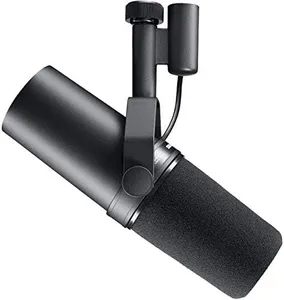
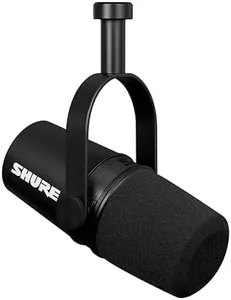
Shure SM7B Vocal Dynamic Microphone – XLR Studio Mic for Podcasting, Recording, Broadcasting, Streaming & Gaming – Smooth, Warm Sound, Rugged Build, Detachable Windscreen, Wide Frequency Range, Black

Rating
10.0
Chosen by1,362
Microphone Type
Frequency Response

Most important from
12533 reviews

Microphone Type
If you have a home studio that isn't properly treated acoustically, it's simple, favor dynamic microphones in your setup.
Frequency Response
The low boost and tapered high end is flattering, unlike some condenser microphones that will rip your head off with the boost in high frequencies.

The Shure SM7B is a highly regarded dynamic microphone that fits well into the studio microphone category, especially for vocals. Its unidirectional polar pattern is designed to focus on the sound source in front of it while minimizing background noise, making it an excellent choice for recording, podcasting, and streaming. One of its standout features is the smooth and flat frequency response, which delivers clean and natural sound reproduction, ensuring that vocals come through warm and clear. Many top professionals trust this microphone, highlighting its versatility for various applications, including music production and voiceover work.

The microphone is built with rugged construction, designed to withstand regular use, which adds to its reliability. It also comes with a detachable windscreen that helps reduce plosive sounds and breath noise when close-miking, an essential feature for clear vocal recording.

The SM7B does have some drawbacks to consider. It requires a good amount of gain (at least 60dB) to achieve optimal sound quality, which means you might need a high-quality audio interface or preamp. Additionally, as it's an XLR microphone, it won’t connect directly to computers without an interface, which could be a hurdle for those looking for a more straightforward USB option. Another point to consider is its weight and size, as it might not be as portable as some compact microphones available today, making it less ideal for on-the-go recording. Despite these minor issues, the Shure SM7B remains a top choice for anyone serious about achieving high-quality vocal recordings, whether in a studio setting or for live streaming, thanks to its professional-grade audio performance and robust design.

Rating
10.0
Chosen by1,362
Microphone Type
Frequency Response

Most important from
12533 reviews

Microphone Type
If you have a home studio that isn't properly treated acoustically, it's simple, favor dynamic microphones in your setup.
Frequency Response
The low boost and tapered high end is flattering, unlike some condenser microphones that will rip your head off with the boost in high frequencies.
#2

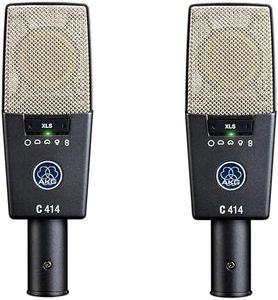
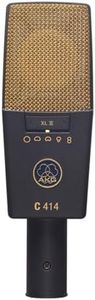
AKG Pro Audio C414XLS Pair Studio Grade Professional Large Diaphragm, Dual Capsule, Multi-Pattern, Vocal & Instrument Condenser Microphone with Aluminum Carrying Case. XLR Connector. Gray with Gold.

Rating
8.2
Polar Pattern
Self-Noise

Most important from
1297 reviews

Polar Pattern
The versatility of this microphone is exceptional, offering multiple polar patterns suitable for various recording situations.
Self-Noise
The standout characteristic of this microphone is its very low self-noise, making it sensational for recording quiet sound effects and acoustic guitar.

The AKG Pro Audio C414XLS PAIR is a professional-grade studio microphone known for its versatility and high-quality sound. The matched pair of large diaphragm condenser microphones offers nine selectable polar patterns, making it adaptable for various recording environments and ensuring precise capture of vocals and instruments.

Its frequency response range of 20-20,000 Hz and low self-noise level of 6 dB-A contribute to its capability to deliver clear and detailed audio recordings. The sensitivity of 23 mV/Pa and high max SPL ensure it can handle both delicate and loud sounds without distortion.

Additionally, features like the peak hold LED for monitoring overload peaks and the robust construction make it reliable for both studio and live applications. The inclusion of accessories such as shock mounts, wind screens, and an aluminum carrying case adds to its value, but the microphones' weight and the need for an XLR connection could require more advanced setup knowledge and equipment. This microphone pair is best suited for professional recording artists and sound engineers who need a versatile and high-performing tool for detailed vocal and instrument recording.

Rating
8.2
Polar Pattern
Self-Noise

Most important from
1297 reviews

Polar Pattern
The versatility of this microphone is exceptional, offering multiple polar patterns suitable for various recording situations.
Self-Noise
The standout characteristic of this microphone is its very low self-noise, making it sensational for recording quiet sound effects and acoustic guitar.
#3

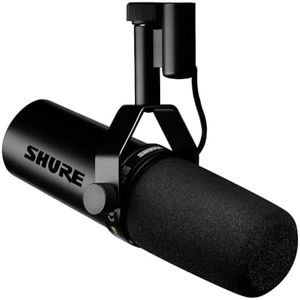
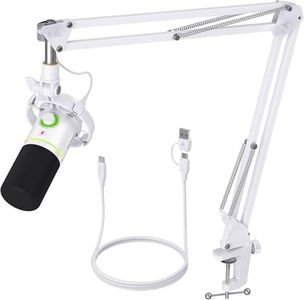
Shure SM7dB Dynamic Vocal Microphone with Built-in Preamp – Studio Mic for Streaming, Podcasting, and Recording – Smooth Sound, Wide Frequency Range, Rugged Build, Windscreen Included, Black

The Shure SM7dB is a dynamic studio microphone designed especially for vocals, podcasting, and streaming. It stands out because it has a built-in preamp, providing extra clean gain (+18 or +28 dB) without needing additional equipment. This simplifies setup, especially for users seeking good sound quality with fewer devices. The microphone uses a unidirectional (cardioid) polar pattern that effectively isolates the voice from background noise, making it suitable for recording in less-than-ideal environments.

Its wide frequency response ensures the voice sounds smooth and natural, capturing both music and speech with clarity. The built-in shock isolation and pop filter reduce unwanted noises such as breath sounds and handling bumps, delivering polished sound from the start. The rugged build and electromagnetic shielding enhance reliability and resistance to interference. Additionally, the included foam windscreen helps soften plosives.

As a dynamic microphone, it might not capture very subtle vocal details as precisely as some condenser mics. Its size and weight (2.7 pounds) also make it less portable for casual use. The SM7dB is a versatile, professional-quality vocal microphone ideal for users seeking clear, broadcast-ready audio with minimal gear complexity, particularly suited for streamers, podcasters, and vocalists recording in a variety of environments.

Buying Guide for the Best Studio Microphones For Vocals

Choosing the right studio microphone for vocals is crucial for achieving the best sound quality in your recordings. The right microphone can capture the nuances of your voice, providing clarity and depth. When selecting a studio microphone, it's important to consider several key specifications that will influence the performance and suitability of the microphone for your specific needs. Understanding these specifications will help you make an informed decision and ensure that you get the best microphone for your vocal recordings.
Microphone TypeMicrophones come in different types, such as dynamic, condenser, and ribbon. This spec is important because each type has unique characteristics that affect sound quality. Dynamic microphones are durable and handle high sound pressure levels well, making them suitable for live performances and loud vocalists. Condenser microphones are more sensitive and provide a wider frequency response, capturing more detail and nuance, ideal for studio recordings. Ribbon microphones offer a warm, vintage sound but are more delicate. Choose a dynamic microphone if you need durability and versatility, a condenser for detailed studio work, or a ribbon for a classic sound.
Polar PatternThe polar pattern of a microphone describes how it picks up sound from different directions. This is important because it affects how much ambient noise is captured along with the vocals. Common polar patterns include cardioid, omnidirectional, and figure-8. Cardioid microphones pick up sound primarily from the front, reducing background noise, making them great for solo vocal recordings. Omnidirectional microphones capture sound equally from all directions, useful in capturing the ambiance of a room. Figure-8 microphones pick up sound from the front and back, useful for duets or capturing room acoustics. Choose a cardioid pattern for focused vocal recording, omnidirectional for natural room sound, or figure-8 for specific recording setups.
Frequency ResponseFrequency response refers to the range of frequencies a microphone can capture. This is important because it determines how accurately the microphone can reproduce the sound of your voice. A flat frequency response means the microphone captures all frequencies equally, providing a natural sound. Some microphones have tailored frequency responses that enhance certain frequencies, such as boosting the mid-range for vocal clarity. For most vocal recordings, a microphone with a frequency response of 20 Hz to 20 kHz is sufficient. Choose a microphone with a flat response for a natural sound or one with tailored boosts if you want to enhance specific vocal qualities.
SensitivitySensitivity measures how effectively a microphone converts sound into an electrical signal. This is important because it affects how well the microphone can capture quiet sounds. Higher sensitivity microphones are better at picking up subtle nuances in a vocal performance, while lower sensitivity microphones are better for loud environments. Sensitivity is usually measured in millivolts per pascal (mV/Pa). If you have a soft voice or are recording in a quiet studio, choose a higher sensitivity microphone. For louder environments or powerful vocalists, a lower sensitivity microphone may be more appropriate.
Self-NoiseSelf-noise is the inherent noise produced by the microphone itself. This is important because lower self-noise means cleaner recordings with less background hiss. Self-noise is measured in decibels (dB). For studio vocal recordings, a microphone with a self-noise level below 20 dB is generally considered good. If you are recording in a very quiet environment and need pristine audio quality, look for microphones with self-noise levels below 10 dB. Choose a microphone with low self-noise to ensure your recordings are as clean and clear as possible.
Max SPL (Sound Pressure Level)Max SPL indicates the highest sound level a microphone can handle before distorting. This is important for recording loud vocalists or instruments. Max SPL is measured in decibels (dB). A higher max SPL means the microphone can handle louder sounds without distortion. For most vocal recordings, a max SPL of 120 dB or higher is sufficient. If you are recording very loud vocal performances or instruments, look for a microphone with a max SPL of 140 dB or higher. Choose a microphone with a high max SPL if you need to capture loud sounds without distortion.

FAQ