We Use CookiesWe use cookies to enhance the security, performance, functionality and for analytical and promotional activities. By continuing to browse this site you are agreeing to our privacy policy

10 Best Spotting Scopes 2026 in the United States
How do we rank products for you?

Our technology thoroughly searches through the online shopping world, reviewing hundreds of sites. We then process and analyze this information, updating in real-time to bring you the latest top-rated products. This way, you always get the best and most current options available.

headphones-stars

Our Top Picks

#1

Winner

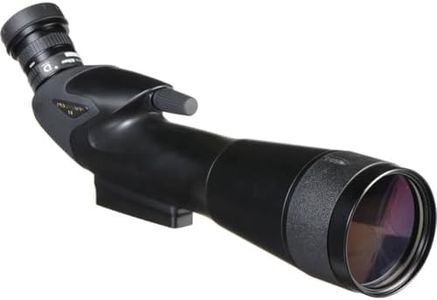
Nikon Prostaff 5 Proscope 82mm Angled Body with 20-60x Zoom, Black

Rating
10.0
Chosen by1,105
Magnification
Field of View

Most important from
58 reviews

Magnification
Amazingly better and stronger in power compared to other scopes, with clear edges and no blue fringing.
Field of View
Wide field-of-view and easy to adjust 20-60x zoom make it versatile for various viewing distances.

The Nikon Prostaff 5 Proscope 82mm is a solid choice for anyone looking for a reliable spotting scope, particularly enthusiasts of bird watching or nature observation. With an impressive 82mm objective lens, it strikes a great balance between size and brightness, allowing for clear images even in low-light conditions. The multicoated optics enhance brightness and contrast, ensuring that colors are rendered accurately, which is crucial for detailed observations. The adjustable zoom ranging from 20x to an impressive 60x provides versatility, accommodating various viewing distances and situations.

One of the notable strengths of this scope is its ergonomic and lightweight design, weighing just 4.1 pounds, making it manageable for extended use or transport. The Porro prism construction contributes to its compact form, while internal surface texturing minimizes reflective light loss, which can be beneficial during bright days.

The Prostaff 5 is also built to withstand challenging outdoor conditions, being both waterproof and fogproof thanks to its nitrogen-purged and O-ring sealed construction. This feature adds to its longevity and reliability in different weather scenarios, a definite plus for outdoor enthusiasts. Additionally, the built-in sliding sunshade helps prevent glare and protects the lens from dust and rain, enhancing the user experience. However, there are a couple of considerations to keep in mind. The weight, while portable, may still be a bit heavy for some users who prefer ultra-light models for hiking or extended treks. Also, while the magnification up to 60x is excellent for far distances, it may be challenging to stabilize at maximum zoom without a sturdy tripod, which might be an extra expense.

Rating
10.0
Chosen by1,105
Magnification
Field of View

Most important from
58 reviews

Magnification
Amazingly better and stronger in power compared to other scopes, with clear edges and no blue fringing.
Field of View
Wide field-of-view and easy to adjust 20-60x zoom make it versatile for various viewing distances.
#2

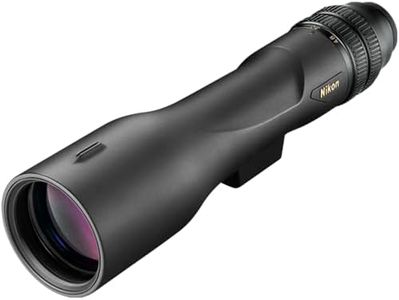
Swarovski Optik ATS-65 HD Spotting Scope with 20x60 Eyepiece (Angled, 65mm)

Rating
8.5
Magnification

Most important from
16 reviews

Magnification
The zoom feature is excellent for bringing in a distant image without losing light or color.

The Swarovski Optik ATS-65 HD Spotting Scope is a high-quality choice for bird watchers and outdoor enthusiasts. It features a 65mm objective lens that allows for excellent light gathering, making images clear and bright. The fluoride-containing HD lenses are designed to minimize color fringing, which ensures high-contrast, true-to-life visuals. Offering a magnification range of 20x to 60x, it gives users flexibility in observing distant subjects closely.

The angled body design is particularly useful for observing birds in trees or the sky without straining your neck. The scope is compact, measuring just under 13 inches in length and weighing 36 ounces, making it relatively portable for outdoor adventures. However, some users may find it slightly heavy for extended carrying. Its robust construction guarantees durability and comes with a lifetime warranty, adding peace of mind. The twist-in eyecups are a nice touch, making it comfortable for users with or without glasses.

The scope is also waterproof and fogproof, ensuring reliable performance in various weather conditions. One potential downside is its higher price point, which might not be ideal for budget-conscious buyers. Nevertheless, with its top-notch optical performance and durable build, it is a solid investment for serious enthusiasts.

Rating
8.5
Magnification

Most important from
16 reviews

Magnification
The zoom feature is excellent for bringing in a distant image without losing light or color.
#3

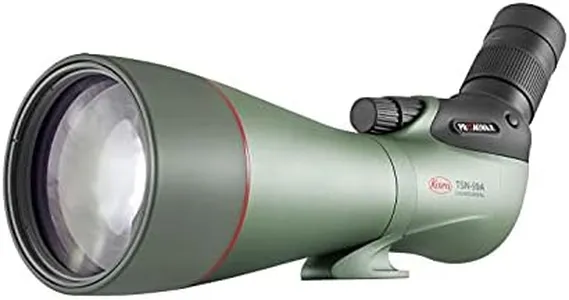
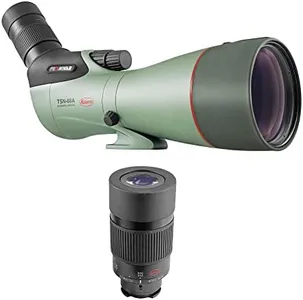
Kowa TSN-88A PROMINAR Pure Fluorite Angled Spotting Scope with TE-11WZ II 25-60x Wide Angle Zoom Eyepiece

The Kowa TSN-88A PROMINAR is a high-quality angled spotting scope designed for serious outdoor enthusiasts like bird watchers, hunters, or nature observers. It features a large 88mm objective lens, which gathers plenty of light for bright and clear images even in lower light conditions. The included TE-11WZ II zoom eyepiece offers a useful magnification range from 25x to 60x, letting you zoom in comfortably on distant subjects.

While the field of view is quite narrow at 0.07 degrees, typical for high magnifications, this means you get a very detailed but smaller viewing area, so it’s best for focused observation rather than scanning wide scenes. The scope’s magnesium alloy body makes it sturdy yet reasonably portable at just over 4 pounds, and it’s both waterproof and fogproof, making it reliable in different weather conditions. Kowa’s fluorite lenses generally provide sharp, clear images with good color accuracy and reduced glare. The limited lifetime warranty adds peace of mind for long-term use.

The scope might feel a bit heavy for casual users wanting something very compact, and the narrow field of view may be challenging for quick target acquisition. This scope suits users who prioritize optical quality, durability, and versatile zoom, and who don’t mind carrying a moderately sized optic for detailed spotting.

Buying Guide for the Best Spotting Scopes

When choosing a spotting scope, it's important to consider your specific needs and how you plan to use the scope. Spotting scopes are used for a variety of activities such as bird watching, hunting, target shooting, and nature observation. The right spotting scope for you will depend on factors like magnification, objective lens size, field of view, and other features. Understanding these key specifications will help you make an informed decision and ensure you get the best scope for your needs.
MagnificationMagnification refers to how much closer an object appears through the scope compared to the naked eye. This is important because higher magnification allows you to see more detail at greater distances. Spotting scopes typically have magnification ranges from 15x to 60x. Lower magnification (15x-30x) is suitable for general observation and provides a wider field of view, making it easier to locate objects. Higher magnification (30x-60x) is ideal for detailed viewing of distant objects but can result in a narrower field of view and may require a tripod for stability. Choose a magnification range based on your primary use; for example, bird watchers may prefer lower magnification for scanning large areas, while target shooters might need higher magnification for precise detail.
Objective Lens SizeThe objective lens size is the diameter of the front lens of the spotting scope, measured in millimeters. This spec is important because a larger objective lens allows more light to enter the scope, resulting in a brighter and clearer image, especially in low-light conditions. Common sizes range from 50mm to 100mm. Smaller lenses (50mm-60mm) are more compact and lightweight, making them easier to carry and handle, but they may not perform as well in low light. Larger lenses (80mm-100mm) provide better image quality and brightness but are bulkier and heavier. Consider where and when you'll be using the scope; if you need portability, a smaller lens might be better, but for stationary use in varying light conditions, a larger lens is preferable.
Field of ViewField of view (FOV) is the width of the area you can see through the scope at a specific distance, usually measured in feet at 1,000 yards. This spec is important because a wider field of view makes it easier to locate and track moving objects. Spotting scopes with lower magnification generally have a wider field of view, while higher magnification narrows the field of view. If you need to scan large areas or follow fast-moving subjects, a wider field of view is beneficial. For detailed observation of stationary objects, a narrower field of view may be acceptable. Choose a field of view that matches your activity; bird watchers and nature observers often prefer a wider FOV, while target shooters may prioritize other specs.
Eye ReliefEye relief is the distance from the eyepiece to your eye where you can still see the full field of view. This is important for comfort, especially if you wear glasses. Longer eye relief (15mm or more) allows you to see the entire image without having to press your eye close to the eyepiece, which is more comfortable for extended viewing sessions. Shorter eye relief can be uncomfortable and may not provide the full field of view for eyeglass wearers. If you wear glasses or plan to use the scope for long periods, look for a spotting scope with longer eye relief to ensure a comfortable viewing experience.
Lens CoatingLens coating refers to the special coatings applied to the lenses to reduce glare and improve light transmission, resulting in clearer and brighter images. This is important because better light transmission enhances image quality, especially in low-light conditions. There are different levels of lens coating: single-coated, fully-coated, multi-coated, and fully multi-coated. Single-coated lenses have a basic anti-reflective coating, while fully multi-coated lenses have multiple layers of coatings on all air-to-glass surfaces, providing the best image quality. For the best performance, especially in challenging light conditions, choose a spotting scope with fully multi-coated lenses.
Waterproof and FogproofWaterproof and fogproof features ensure that the spotting scope can withstand harsh weather conditions and prevent internal fogging caused by temperature changes. This is important for maintaining clear visibility and protecting your investment. Waterproof scopes are sealed to prevent water from entering, while fogproof scopes are filled with nitrogen or argon gas to prevent internal fogging. If you plan to use your spotting scope in varying weather conditions or in humid environments, look for models that are both waterproof and fogproof to ensure reliable performance.
Weight and PortabilityWeight and portability refer to how easy it is to carry and handle the spotting scope. This is important if you plan to take the scope on hikes or travel with it. Lighter and more compact scopes are easier to transport and handle, but they may have smaller objective lenses and lower magnification. Heavier scopes often have larger lenses and higher magnification, providing better image quality but can be cumbersome to carry. Consider how you will use the scope; if you need to move frequently or cover long distances, a lighter and more portable scope is ideal. For stationary use, weight may be less of a concern.

FAQ