We Use CookiesWe use cookies to enhance the security, performance, functionality and for analytical and promotional activities. By continuing to browse this site you are agreeing to our privacy policy

10 Best Guitar Strings For Beginners 2026 in the United States
How do we rank products for you?

Our technology thoroughly searches through the online shopping world, reviewing hundreds of sites. We then process and analyze this information, updating in real-time to bring you the latest top-rated products. This way, you always get the best and most current options available.

headphones-stars

Our Top Picks

#1

Winner

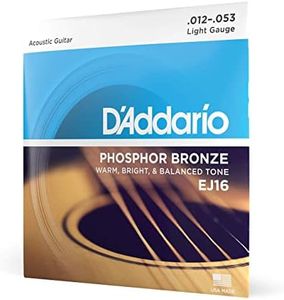
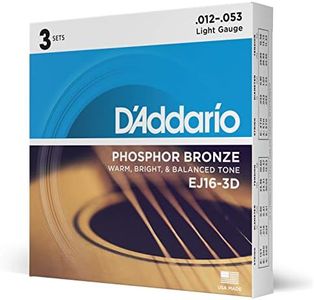
D'Addario Guitar Strings - Phosphor Bronze Acoustic Guitar Strings - EJ16-3D - Rich, Full Tonal Spectrum - For 6 String Guitars - 12-53 Light, 3-Pack

Rating
10.0
Chosen by1,483
String Gauge
Material

Most important from
70466 reviews

String Gauge
Light gauge strings make playing easier on the fingers, allowing for comfortable long sessions without sacrificing tone richness.
Material
Their feel is natural and uncoated, which some players appreciate for its authentic touch despite requiring more frequent changes.

The D'Addario Phosphor Bronze Acoustic Guitar Strings (EJ16-3D, Light 12-53 gauge) offer a warm and balanced tone that suits a wide range of musical styles, making them a solid choice for beginners learning on a 6-string acoustic guitar. Their phosphor bronze material is known for durability and a rich sound, and the strings are precision wound for consistency.

Being light gauge, they are easier to press down and play, which is helpful for new players still developing finger strength. Additionally, these strings resist corrosion, so they last longer and maintain good tone over time. Light gauge strings may produce a softer volume and less brightness compared to heavier gauges, which some players might notice as their skills grow.

These strings have a natural feel since they are not coated, so they might require more frequent changing compared to coated strings. Made in the USA and very popular among acoustic players, these strings come in convenient 3-packs, offering good value and reliability for beginners looking to get started with high-quality strings.

Rating
10.0
Chosen by1,483
String Gauge
Material

Most important from
70466 reviews

String Gauge
Light gauge strings make playing easier on the fingers, allowing for comfortable long sessions without sacrificing tone richness.
Material
Their feel is natural and uncoated, which some players appreciate for its authentic touch despite requiring more frequent changes.
#2

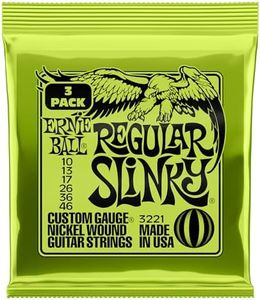
Ernie Ball Regular Slinky Nickel Wound Electric Guitar Strings 3-pack, 10-46 Gauge (P03221)

Rating
8.8
Coating

Most important from
56042 reviews

Coating
Ernie Ball Regular Slinky strings offer a perfect balance of flexibility and durability, delivering a bright, consistent tone.

The Ernie Ball Regular Slinky Nickel Wound Electric Guitar Strings (P03221) are a popular choice among both beginners and seasoned players, offering three individually wrapped sets. With a gauge of 10-46, these strings are considered the industry standard and are known for their bright, balanced tone.

Made from nickel, they provide a pleasing sound quality and are preferred by legends like Slash and Eric Clapton, which speaks volumes about their reliability and performance across various genres. The Element Shield Packaging ensures the strings remain fresh, adding to their longevity.

However, they do not come with any special coating, which could mean more frequent replacements especially for beginners still mastering their technique. These strings are easy to play, making them suitable for newcomers, but the lack of coating might be a downside for those looking for extra durability.

Rating
8.8
Coating

Most important from
56042 reviews

Coating
Ernie Ball Regular Slinky strings offer a perfect balance of flexibility and durability, delivering a bright, consistent tone.
#3

D'Addario Acoustic Guitar Strings, Phosphor Bronze, EJ16, Light Gauge 12-53, 6-String Set, Pack of 1

Rating
8.5
String Gauge

Most important from
70466 reviews

String Gauge
Despite their light gauge, these strings provide a satisfying playability and are suitable for various playing styles, from fingerstyle to powerful strumming.

The D'Addario Phosphor Bronze Acoustic Guitar Strings (EJ16) are an excellent choice for beginners due to their light gauge (12-53), which makes them easier to press down and play. The phosphor bronze material provides a warm and balanced tone that is versatile for various musical genres; this is beneficial for beginners who may still be exploring different styles of music.

Additionally, these strings are precision wound and have a corrosion-resistant coating, which enhances their durability and longevity, meaning you won't need to replace them frequently. Made in the USA, these strings are manufactured to high-quality standards and are a top choice among many guitarists, evidenced by their popularity and high customer ratings.

One downside is that the light gauge may produce less volume and projection compared to heavier strings, which might be a consideration if you're playing in larger spaces or with other musicians. Nonetheless, the ease of play and the rich, full tonal spectrum they offer make them a strong contender for beginners looking to invest in their first set of quality guitar strings.

Rating
8.5
String Gauge

Most important from
70466 reviews

String Gauge
Despite their light gauge, these strings provide a satisfying playability and are suitable for various playing styles, from fingerstyle to powerful strumming.

Buying Guide for the Best Guitar Strings For Beginners

Choosing the right guitar strings is crucial for beginners as it can significantly impact their playing experience and progress. The right strings can make learning easier, more enjoyable, and help develop good playing habits. When selecting guitar strings, consider factors such as string gauge, material, and coating. Understanding these key specifications will help you make an informed decision that suits your playing style and preferences.
String GaugeString gauge refers to the thickness of the strings, usually measured in thousandths of an inch. This spec is important because it affects the playability and tone of the guitar. Lighter gauges (e.g., .009 to .011) are easier to press down and bend, making them ideal for beginners who are still developing finger strength. Medium gauges (e.g., .012 to .014) offer a balance between ease of play and fuller tone, suitable for those who have some experience. Heavier gauges (e.g., .015 and above) produce a richer tone but require more finger strength, which might be challenging for beginners. For most beginners, starting with a lighter gauge is recommended to ease the learning process.
MaterialGuitar strings are made from various materials, each affecting the sound and feel of the strings. Common materials include nickel-plated steel, pure nickel, stainless steel, and phosphor bronze. Nickel-plated steel strings are versatile and provide a bright, balanced tone, making them a popular choice for beginners. Pure nickel strings offer a warmer, vintage tone, while stainless steel strings are known for their durability and bright sound. Phosphor bronze strings are typically used for acoustic guitars and produce a warm, rich tone. Beginners should consider starting with nickel-plated steel strings for their balanced sound and ease of play.
CoatingCoated strings have a thin layer of polymer that protects them from dirt, sweat, and corrosion, extending their lifespan. This spec is important because it can save beginners from frequently changing strings and ensure a consistent playing experience. Coated strings tend to feel smoother and can reduce finger noise, which is beneficial for beginners. However, they might be slightly more expensive than uncoated strings. If you are a beginner who practices regularly and wants strings that last longer, coated strings are a good option. If you prefer a more traditional feel and are okay with changing strings more often, uncoated strings might be suitable.

FAQ