We Use CookiesWe use cookies to enhance the security, performance, functionality and for analytical and promotional activities. By continuing to browse this site you are agreeing to our privacy policy

10 Best Electric Drywall Sanders 2025 in the United States

How do we rank products for you?

Our technology thoroughly searches through the online shopping world, reviewing hundreds of sites. We then process and analyze this information, updating in real-time to bring you the latest top-rated products. This way, you always get the best and most current options available.

headphones-stars

Our Top Picks

#1

Winner

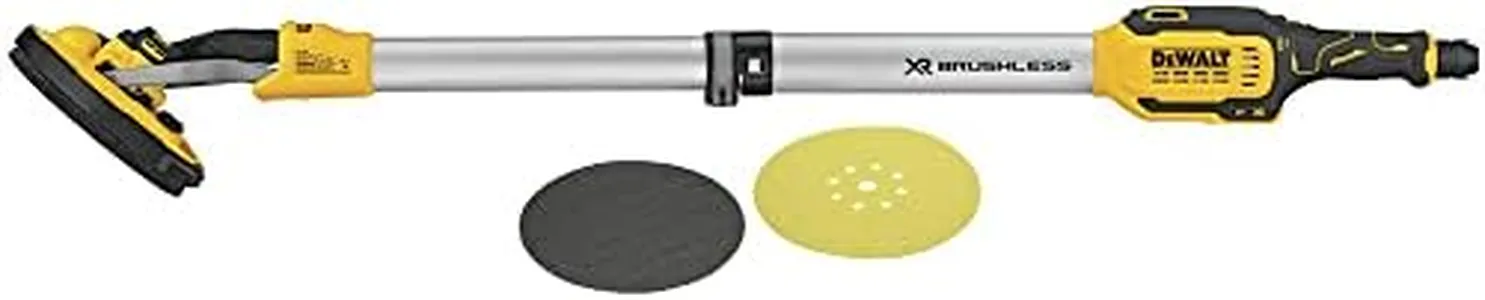
DEWALT 20V MAX Cordless Drywall Sander, Tool Only (DCE800B)

Rating
10.0
Chosen by1,354
Weight
Dust Collection

Most important from
491 reviews

Weight
Great tool, easy to use and lightweight. The 20-volt battery only lasts for about 45 minutes.
Dust Collection
Pair this up with a 5-gallon Rigid vacuum with a HEPA setup and the floors are completely clean afterwards, achieving 99% dust extraction.

The DEWALT 20V MAX Cordless Drywall Sander is a solid option for those looking to tackle drywall projects, especially DIY enthusiasts and professionals who value mobility and ease of use. One of its standout features is the brushless motor, which not only enhances performance but also extends battery life. The use of a telescoping shaft makes it easier to reach confined spaces and high areas without much hassle, which is a big plus for many users.

The cordless design adds significant convenience, eliminating the limitations of cords while working. The Wireless Tool Control feature, which allows for wireless operation when paired with compatible dust extractors, is particularly useful for maintaining a cleaner workspace. The variable-speed dial is another great feature, enabling users to adjust speed according to their specific sanding needs.

This sander weighs around 8.6 pounds, which some users might find a bit heavy for extended use. Additionally, it requires a separate purchase of the battery, as it is sold as a tool-only version. This could be a drawback for those who are new to DEWALT tools and do not already own compatible batteries. The dust collection system is effective when used with DEWALT dust extractors, but users who rely on other brands may find it less compatible.

Rating
10.0
Chosen by1,354
Weight
Dust Collection

Most important from
491 reviews

Weight
Great tool, easy to use and lightweight. The 20-volt battery only lasts for about 45 minutes.
Dust Collection
Pair this up with a 5-gallon Rigid vacuum with a HEPA setup and the floors are completely clean afterwards, achieving 99% dust extraction.
#2

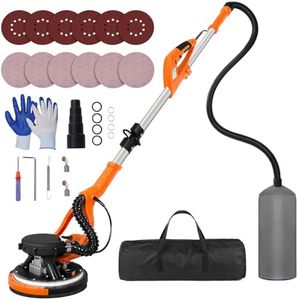
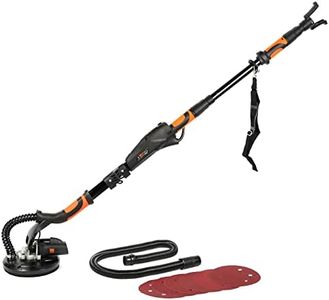
WEN DW5084 5-Amp 2-in-1 Variable Speed Dual-Head Drywall Sander with 15-Foot Dust Hose , Black

Rating
9.4
Speed (RPM)
Weight
Dust Collection

Most important from
7155 reviews

Speed (RPM)
The variable speed motor and soft start function provide excellent control.
Weight
It is heavier than expected, which can be tiring during prolonged use.
Dust Collection
Remarkable dust collection, with almost zero dust in the room during use.

The WEN DW5084 drywall sander offers a versatile solution for sanding needs with its 2-in-1 design that includes both triangular and circular sanding heads. This feature allows for easy switching between sanding shapes without the need for tools, enhancing user convenience. Its variable speed control, ranging from 600 to 1500 RPM, provides flexibility to handle different sanding tasks effectively. The 5-amp motor delivers ample power for consistent performance, which is crucial for achieving smooth results on drywall surfaces.

One of the standout features is the 15-foot dust hose, which, combined with the improved hole configuration, enhances dust collection efficiency, minimizing cleanup time and maintaining a cleaner work environment. However, it is worth noting that the round sanding head is only compatible with WEN's DW series replacement sandpaper, which may limit options for some users. Weighing 16.3 pounds, this sander may be on the heavier side for prolonged use, potentially causing fatigue during extended projects.

The collapsible body design is a practical addition, making storage and transport more manageable. Included in the package are six 9-inch sanding discs and six 11-1/4-inch triangular sandpapers of assorted grits, providing users with a variety of options for different sanding tasks right out of the box. Backed by a two-year warranty, the WEN DW5084 offers a reliable option for both DIY enthusiasts and professionals looking for a versatile and powerful drywall sander. While its weight might be a drawback for some, its functionality and features make it a strong contender in its category.

Rating
9.4
Speed (RPM)
Weight
Dust Collection

Most important from
7155 reviews

Speed (RPM)
The variable speed motor and soft start function provide excellent control.
Weight
It is heavier than expected, which can be tiring during prolonged use.
Dust Collection
Remarkable dust collection, with almost zero dust in the room during use.
#3

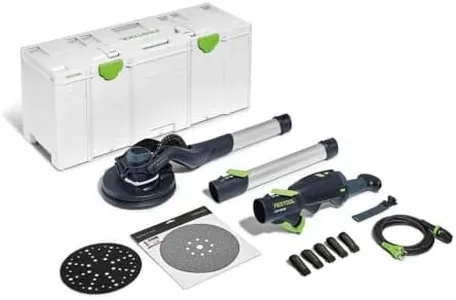
Festool 575994 Drywall Sander PLANEX LHS 2 225 EQI-Plus

Rating
9.4
Weight
Dust Collection

Most important from
94 reviews

Weight
The quality of parts and weight remind you of the superior craftsmanship Festool is known for.
Dust Collection
The vacuum works exceptionally well and the integrated light is indispensable.

The Festool 575994 Planex LHS 2 225 EQI-Plus Drywall Sander is a solid choice for both professionals and DIY enthusiasts looking for a reliable tool for drywall finishing. One of its standout features is the integrated LED light ring that highlights uneven surfaces, making it easier to achieve a flawless finish. The adjustable suction power is a great addition, as it reduces strain on the arms and back, allowing for longer work sessions without discomfort.

In terms of design, this sander offers an ergonomic T-handle, which enhances maneuverability and helps reach tricky areas without adding excessive weight. The variable working length with the option to add extensions is also a plus, providing versatility for different projects. Another strong point is the brushless EC motor, which promises durability and requires no maintenance, making it a cost-effective option in the long run.

The Festool Planex is a top-tier option for anyone serious about drywall work. It excels in performance and usability, but potential buyers should consider its weight and corded nature against their specific needs and workspace conditions.

Rating
9.4
Weight
Dust Collection

Most important from
94 reviews

Weight
The quality of parts and weight remind you of the superior craftsmanship Festool is known for.
Dust Collection
The vacuum works exceptionally well and the integrated light is indispensable.

Buying Guide for the Best Electric Drywall Sanders

Choosing the right electric drywall sander can make your sanding tasks much easier and more efficient. The right model for you will depend on the specific needs of your projects, such as the size of the area you need to sand, the type of surfaces you are working on, and your own comfort and experience level. Understanding the key specifications of electric drywall sanders will help you make an informed decision and ensure you get the best tool for your needs.
Power (Wattage)Power, measured in watts, determines how strong and efficient the sander is. Higher wattage means more power, which can make sanding faster and more effective, especially on tougher surfaces. For light, occasional use, a sander with lower wattage (around 500-600 watts) may suffice. For more frequent or heavy-duty use, look for a sander with higher wattage (700 watts or more). Consider your typical projects: if you often work on large or rough surfaces, a more powerful sander will save you time and effort.
Speed (RPM)Speed, measured in revolutions per minute (RPM), indicates how fast the sanding head spins. Variable speed settings are important because they allow you to adjust the speed based on the material and the level of finish you need. Lower speeds (around 600-1000 RPM) are suitable for delicate surfaces or fine finishing, while higher speeds (up to 2000 RPM or more) are better for removing material quickly. Choose a sander with adjustable speed settings to give you flexibility for different tasks.
WeightThe weight of the sander affects how easy it is to handle, especially for extended periods. Lighter sanders (around 5-7 pounds) are easier to maneuver and less tiring to use, making them ideal for overhead or vertical sanding. Heavier models (8 pounds or more) might offer more stability and power but can be more challenging to use for long durations. Consider your physical strength and the nature of your projects when choosing the weight of your sander.
Dust CollectionDust collection is crucial for maintaining a clean work environment and protecting your health. Many electric drywall sanders come with built-in dust collection systems, which can include a vacuum attachment or a dust bag. A good dust collection system will minimize the amount of dust released into the air, making cleanup easier and reducing respiratory risks. Look for models with efficient dust collection features, especially if you are working indoors or in confined spaces.
Sanding Pad SizeThe size of the sanding pad determines the area you can cover in one pass. Larger pads (9 inches or more) can cover more surface area quickly, making them ideal for large walls or ceilings. Smaller pads (around 7 inches) offer more precision and are better for detailed work or smaller areas. Consider the typical size of your projects: if you often work on large surfaces, a larger pad will be more efficient, while a smaller pad is better for detailed or intricate work.
Handle DesignThe design of the handle affects comfort and control. Ergonomic handles with adjustable lengths and angles can reduce strain and make the sander easier to use, especially for extended periods. Some models also feature additional grips or handles for better control. If you plan to use the sander for long periods or on various surfaces, look for a model with a comfortable, adjustable handle to reduce fatigue and improve precision.

FAQ